
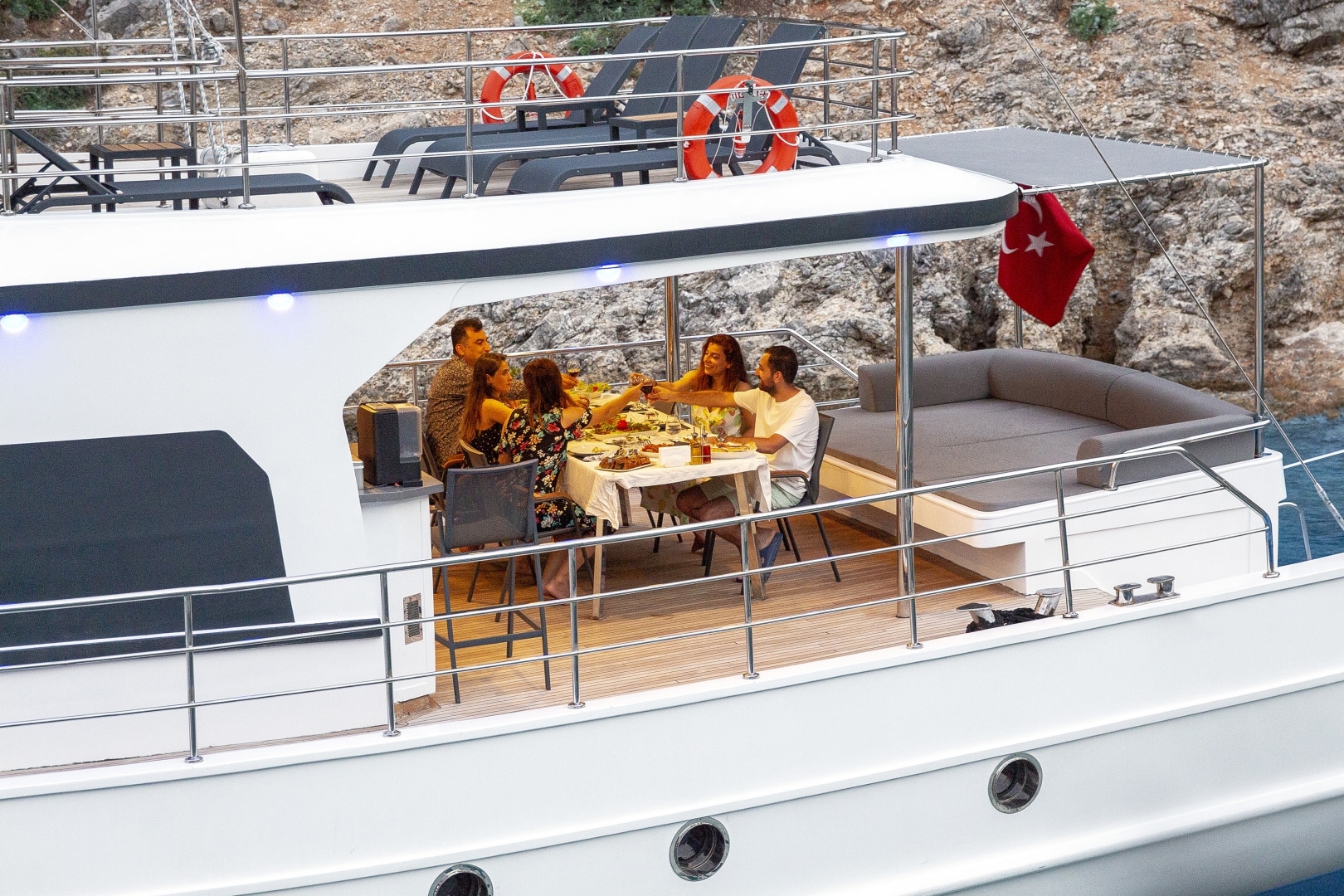
Blue Cruise Dishes: What You Eat on a Private Gulet in Turkey
Blue cruise dining is more than a meal schedule. It is a culinary rhythm shaped by local traditions, seasonal produce, and the pace of life at sea.
This guide explains what is typically served onboard, why the cuisine stays light and ingredient-driven, and how menus adapt to guest preferences.
If you share your dates, group size, and dietary needs, we can outline a realistic onboard dining flow for your week.

Want a menu plan that fits your group?
Share your dates and preferences to receive a short cruise outline and a practical dining approach — without over-planning every meal.
Why Food Matters on a Blue Cruise
A blue cruise is shaped by sea time, swim stops, and long meals on deck. For this reason, onboard food tends to be simple, balanced, and ingredient-led. Instead of heavy sauces and elaborate plating, the focus stays on freshness and clean preparation.
The cuisine is designed to match warm days, gentle movement, and relaxed conversation.

Fresh Seafood Inspired by the Coast
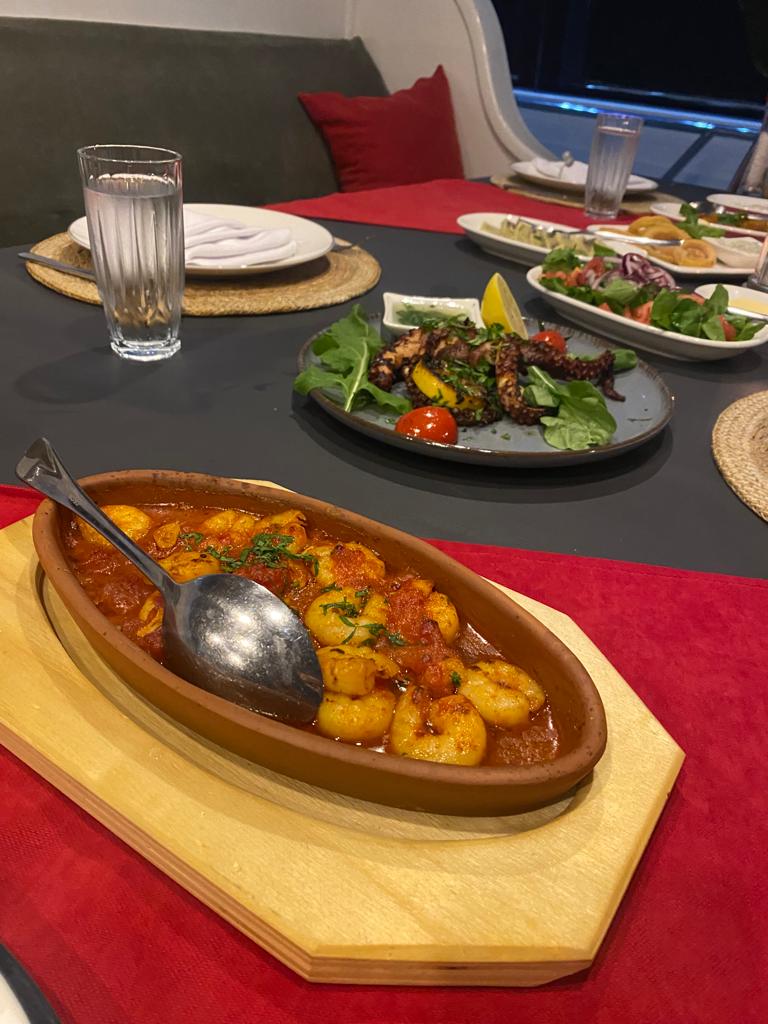
Seafood forms the backbone of blue cruise cuisine. Daily selections often include sea bass, gilthead bream, calamari, shrimp, and octopus.
These ingredients work best with restraint and precise timing. Grilling, light pan-searing, and slow braising protect natural flavor.
Olive oil, lemon, and fresh herbs usually replace heavy sauces, keeping meals lighter at sea.
This style aligns naturally with the core principles of Mediterranean eating patterns. If you want a research-led overview of that approach, see Harvard’s Mediterranean diet research.

Meze Culture: The Foundation of Dining
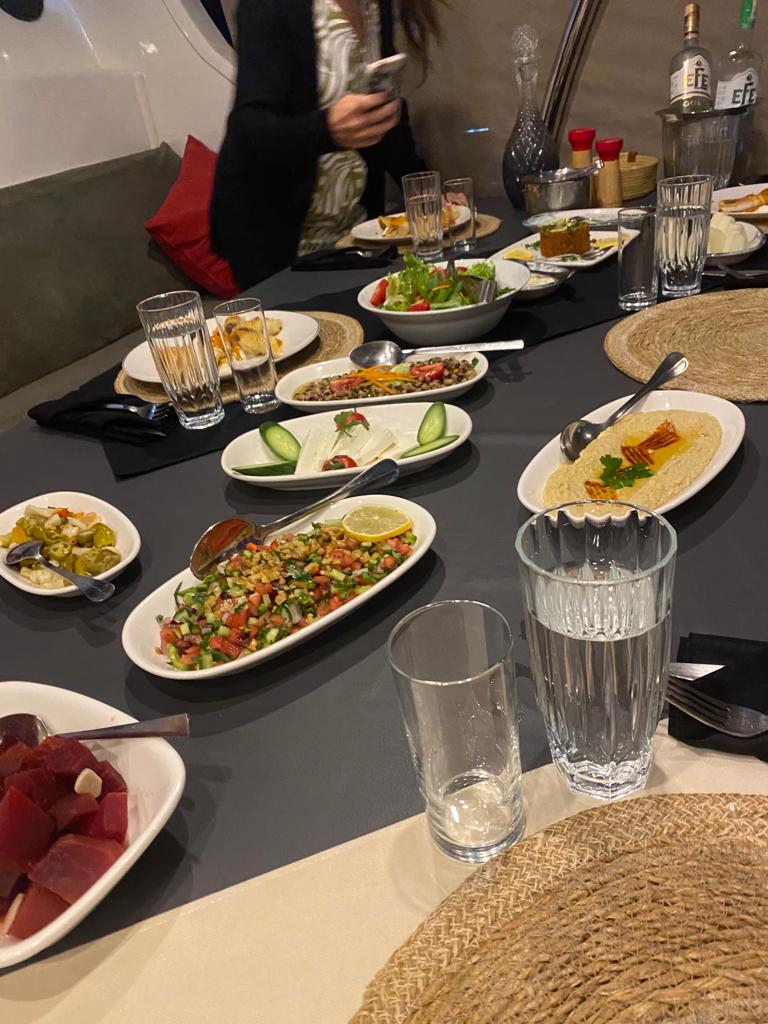
Meze is not simply a starter. It sets the pace of the table. Small plates arrive gradually, encouraging shared tasting and unhurried meals.
Common selections include vine-leaf dolma, yogurt-based dishes, seasonal vegetables cooked in olive oil, and regional herb recipes.
This structure suits life onboard, where the day flows between shade, sea, and slow conversation.
The broader Mediterranean food heritage is also described as a cultural tradition, not only a diet. For that perspective, reference
UNESCO’s Mediterranean diet listing.

Light Grilled Mains for Life at Sea
Rather than heavy courses, onboard menus often favor well-balanced grilled dishes. Lamb, chicken, kebab-style cuts, or beef may be marinated with local spices.
Mains are usually paired with rice, bulgur, and fresh vegetables, keeping meals satisfying without feeling dense.
This balance suits days structured around swimming, sun, and gentle movement.
Oven-Baked Classics with Regional Roots
On calmer evenings, traditional baked dishes may take center stage. Recipes featuring eggplant, tomatoes, and minced meat are layered and gently cooked.
These dishes draw from coastal Anatolian kitchens and feel comforting without becoming heavy.
The emphasis remains on ingredient clarity and steady heat rather than richness.
Fresh Bread and Pide Traditions
Bread is prepared daily onboard many gulets. Pide, often described as Turkish flatbread, is shaped like a boat and topped with cheese, vegetables, or minced meat. Served warm, it stays practical and flavorful. It fits especially well after a long swim or a quiet afternoon at anchor.

Desserts and Seasonal Fruit
Desserts onboard are usually restrained. Baklava may appear on special evenings, while lighter options are more common.
Seasonal fruit such as figs, melon, grapes, and citrus often completes the table.
Turkish delight and freshly brewed coffee may follow, keeping the finish gentle rather than overly sweet.
How We Plan Your Onboard Dining
A good onboard week does not require complicated menus. It requires good sourcing, clear preferences, and calm timing.
Before your trip, we confirm dietary needs, meal pace, and any must-have dishes, then align the plan with the crew’s provisioning.
For guests who want a complete cruise overview, the blue cruise guide explains how days typically flow onboard.
- Preferences first: allergies, dislikes, and meal timing are confirmed early.
- Seasonal sourcing: seafood and produce vary by week and region.
- Balanced rhythm: lighter lunches and calm, well-timed dinners.
Request Your Offer
Fast reply: Send your dates and group size.
We will respond with a short shortlist of inspected gulets and a practical cruise outline, including a menu approach for your group.
Request Quote
Tip: If possible, include dietary needs (vegetarian, halal, allergies) and your preferred meal pace.
This helps the onboard team plan sourcing and timing more precisely.
Frequently Asked Questions
What food is typically served on a blue cruise?
Menus often include seafood, meze plates, olive-oil vegetable dishes, grilled mains, fresh bread, and seasonal fruit.
Can menus be adapted for dietary needs?
Yes. Most gulets can adapt meals for allergies and preferences when details are shared in advance.
Is the cuisine heavy or light?
It is usually light and balanced, designed to match swimming days and warm weather.
Do gulets serve desserts every day?
Desserts are often moderate. Baklava may appear on special evenings, while fruit is common.
How do you plan meals onboard?
A good plan starts with dietary needs, then aligns provisioning with season and route timing.