
Good to Know About Turkish Coffee
Turkish coffee is a traditional method of preparing coffee that has a long history in Turkey and the Middle East. It is believed to have originated in the Arab world and was introduced to Turkey during the Ottoman Empire. The method of making Turkish coffee involves finely ground coffee beans, water, and sugar (optional) being brewed together in a special pot called a “cezve” or “ibrik.” The coffee is traditionally served in small cups without milk, and it is known for its strong, rich flavor and the layer of coffee grounds that settle at the bottom of the cup.
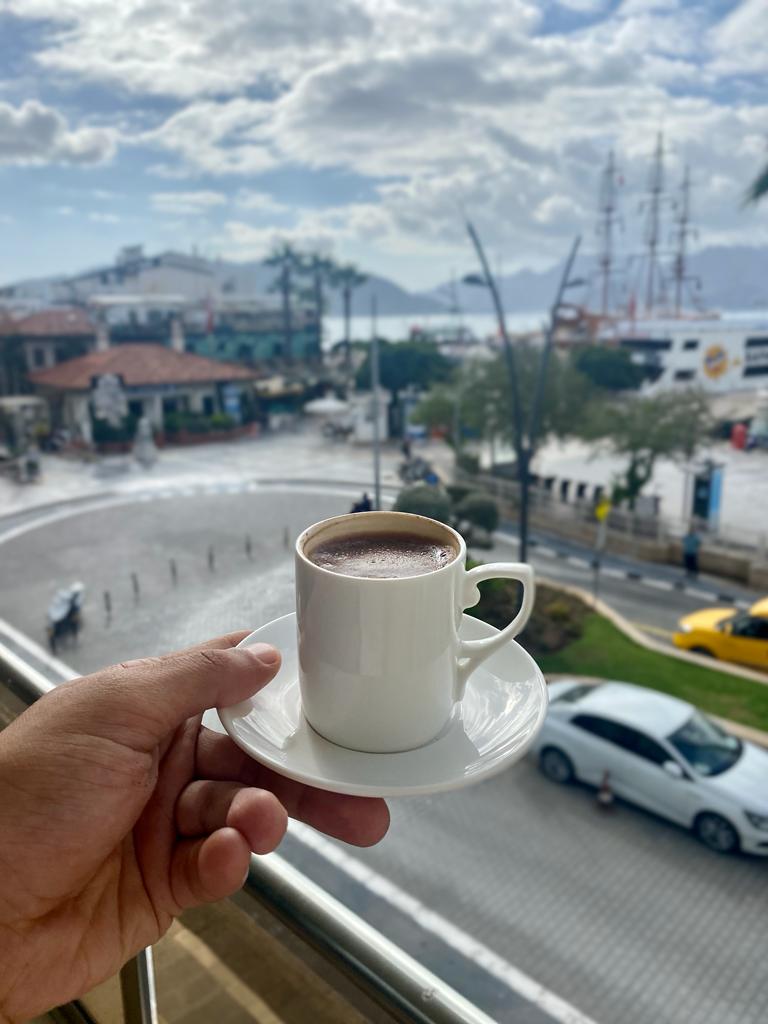
The process of making Turkish coffee is as follows:
- Very finely ground coffee beans are combined with cold water and sugar (if desired) in the cezve or ibrik.
- The mixture is stirred to ensure even distribution of the coffee and sugar.
- The coffee is then slowly heated over low to medium heat, without stirring. As the coffee begins to heat, it forms a frothy layer on top, known as the “kaimak.”
- Just before the coffee comes to a boil, it is removed from the heat to prevent it from overflowing.
- The coffee is returned to the heat, and this process is repeated a total of three times. The froth is allowed to form and rise during each heating.
- Once the coffee is heated three times and the froth has formed, it is poured into small cups, including the froth, and allowed to settle for a moment.
Turkish coffee is often enjoyed with a glass of water and a small sweet treat, such as Turkish delight. It is not only a popular way to enjoy coffee but also a significant cultural tradition in Turkey and other parts of the Middle East. The method of preparation and serving of Turkish coffee has a unique and symbolic importance, and it is often used to welcome guests and mark special occasions.
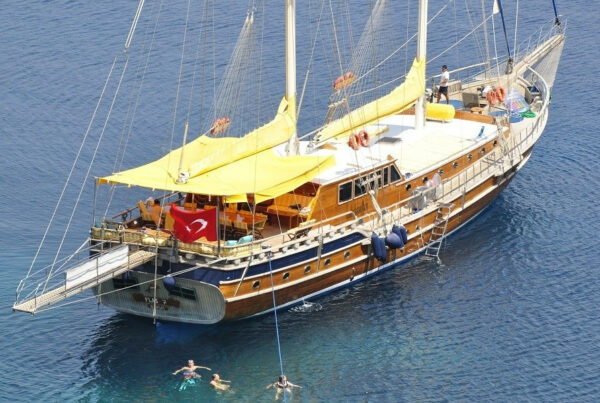
Turkish coffee is served on many boats in Turkey during the blue cruise. We recommend that you drink Turkish coffee, especially after breakfast. For more information on Food and Beverage on the blue cruise, please visit: What Kinds Of Food Can You Eat On A Turkish Gulet Cruise?