
Discover Kayakoy Ruins, Fethiye
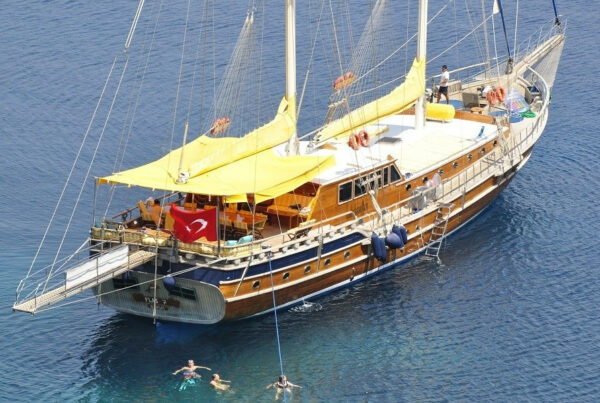
It is possible to explore historical places on the blue cruise with charter a gulet, Kayakoy Fethiye is just one of dozens of options in Turkey. We recommend you plan a blue cruise that starts or ends in Fethiye to see this valuable place that has survived to the present day with its rich historical ruins. However, we can provide you with a transfer.
About Kayakoy Ruins
If you want to discover Kayakoy Ruins, located in the Fethiye district of Mugla, have a history dating back to the ancient period. It is a point known as Karmylassos in ancient times. No finds from this region older than the 4th century BC have yet been found.
It is known that this ancient city was a part of settled life in the Ottoman period as well. However, it is stated that this ancient city was left alone with the transition to the republican period. Such a result showed itself since the Greek people lived in the region in general. With the decision of exchange, the city was completely evacuated. There are approximately 400 households in this region. At the same time, apart from the houses, there are also chapels, churches, schools, and customs buildings in the area.
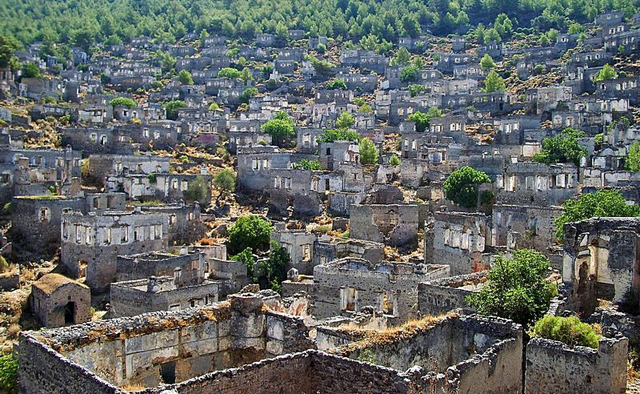
Discover Kayakoy, Fethiye
The most important finds about Kayakoy Ruins are the rock tombs and sarcophagi. Apart from this, there is no case of any ancient period. It is possible to go back at most 2 centuries about Kayakoy. It is also possible to see traces of the recent past frequently in this region.
During the Ottoman period, the Greeks established settlements on the ruins of Karymlassos. This village was also named Levissi. There is also information about this village in the Seyahatname written by Evliya Çelebi. It is also stated that the region was called Kayı Village because of the Turks living in the 15th century. It is estimated that Kayı Turks and Karakeçili Yoruks lived in this region in the early times of the Ottoman Empire. It is in a position where it is stated that Turks live in the plains throughout the region and that the more mountainous areas belong to the Greeks.
It is also stated that the people in this region are engaged in agriculture and have a population of more than 10 thousand by immigration. At the same time, the Orthodox Greek church is in the region. Until the population exchange period, the village of Levissi draws attention with its very fertile and rich state.
Although Balkan Turks were brought to this village after the population exchange, they did not stay in this village. It is also said that the number of people living in the village decreased after a brief time after the exchanges were brought.
You can visit the historical places you want to see during the tour by telling us the places you want to go on your blue cruise with the experienced team of Mirya Yachting.