
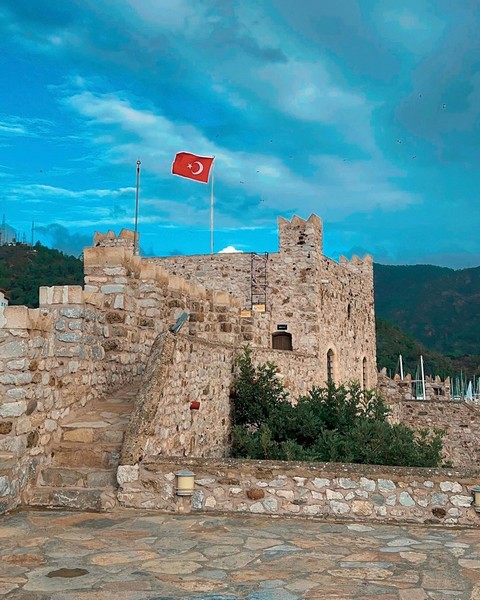
Situated in Mugla’s Marmaris district, Marmaris Castle is a highly significant historical and tourism destination in the area. Situated on a peninsula, the castle commands a stunning view of the Mediterranean behind Marmaris Port. Marmaris Castle has a long history that begins in the third millennium BC. Originally constructed in the Ionian era, the castle was later restored following Alexander the Macedonian’s conquest of Marmaris.
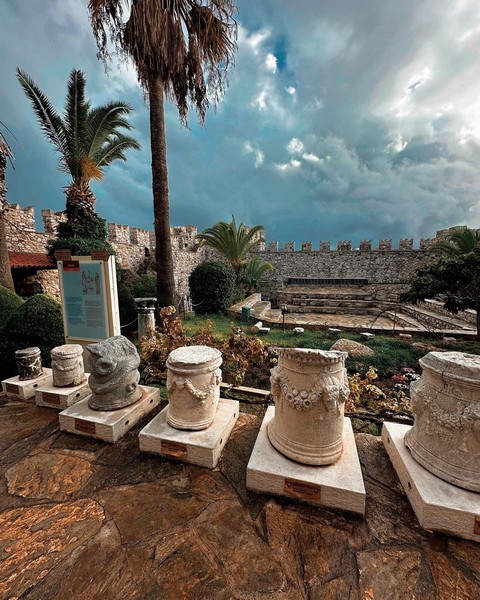
Rebuilt by Sultan Suleyman the Magnificent during the Ottoman era’s Rhodes campaign in 1522, Marmaris Castle still stands strong today. The entire size of the castle is roughly 20,000 square meters. The castle’s walls are ten meters high and roughly 1.5 meters thick. The fortress consists of one dungeon and five bastions. Currently used as a museum and displays a variety of relics related to the town’s history and culture.
 Building and Significance of the Castle
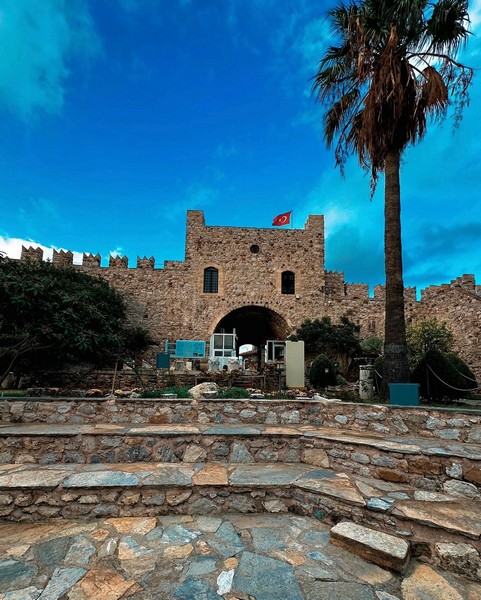
A component of Suleyman the Magnificent’s Rhodes expedition included the reconstruction of Marmaris Castle. Sultan Suleyman the Magnificent had the fortress rebuilt with Marmaris as a base before he conquered Rhodes. A significant part of Marmaris’ security was provided by Marmaris Castle. The city was shielded from maritime attacks by the fortress. The fortress also came to represent the Ottoman Empire’s hegemony over the Aegean Sea.
Cut stone was used to construct Marmaris Castle. The castle’s walls are ten meters high and roughly 1.5 meters thick. The fortress consists of one dungeon and five bastions. The southeast side of the castle is where the main entrance is located. There are iron bars securing the front door. The door bears Suleyman the Magnificent’s autograph. The castle is divided into several areas. These areas include a masjid, a water cistern, a dungeon, and defense towers.
8 Tips Good to Know Marmaris Castle Before Embarking
Exploring castle before embarking on your gulet charter in Marmaris can add a cultural and historical dimension to your trip. Situated on a hill overlooking the town and the harbor, offers a glimpse into the region’s rich past.
Location:
Located in the heart of Marmaris, making it easily accessible. The castle hill is a short walk from the town center and the harbor.
Architectural Features:
The castle’s architecture reflects the influence of different periods. The structure includes massive stone walls, towers, and bastions. It underwent renovations and expansions over the centuries, leaving a blend of architectural styles.
Marmaris Museum:
Within the castle, you’ll find the Marmaris Museum. The museum houses artifacts from the region’s history, including items from the Byzantine, Ottoman, and Turkish Republican eras. It’s an opportunity to delve deeper into the local culture.
 Panoramic Views:
Climb to the top of the castle for panoramic views of Marmaris, the harbor, and the surrounding coastline. It’s an excellent vantage point for capturing photos and appreciating the beauty of the town and its natural surroundings.
Exhibitions and Events:
This beautiful historical castle occasionally hosts exhibitions and events. Check local event calendars to see if there are any special activities or cultural events taking place during your visit.
Explore Marmaris Old Town:
After visiting the castle, take the time to explore Marmaris Old Town. Wander through its narrow streets, discover traditional Turkish architecture, and visit local shops and markets.
Nearby Attractions:
Consider exploring other nearby attractions, such as Marmaris Marina, Marmaris Grand Bazaar, and the Marmaris Amphitheatre. These sites contribute to the overall historical and cultural tapestry of Marmaris.
Cafes and Restaurants:
Relax at one of the cafes or restaurants near the castle. Many establishments offer picturesque views of the harbor and the castle, providing a delightful setting for a meal or a refreshing drink.
Gulet charter provides a cultural prelude to your maritime adventure. It’s an opportunity to connect with the region’s history and enjoy the charm of Marmaris before setting sail along the stunning Turkish coast.